
Course guides and yardage books
Read the course.
Play better.
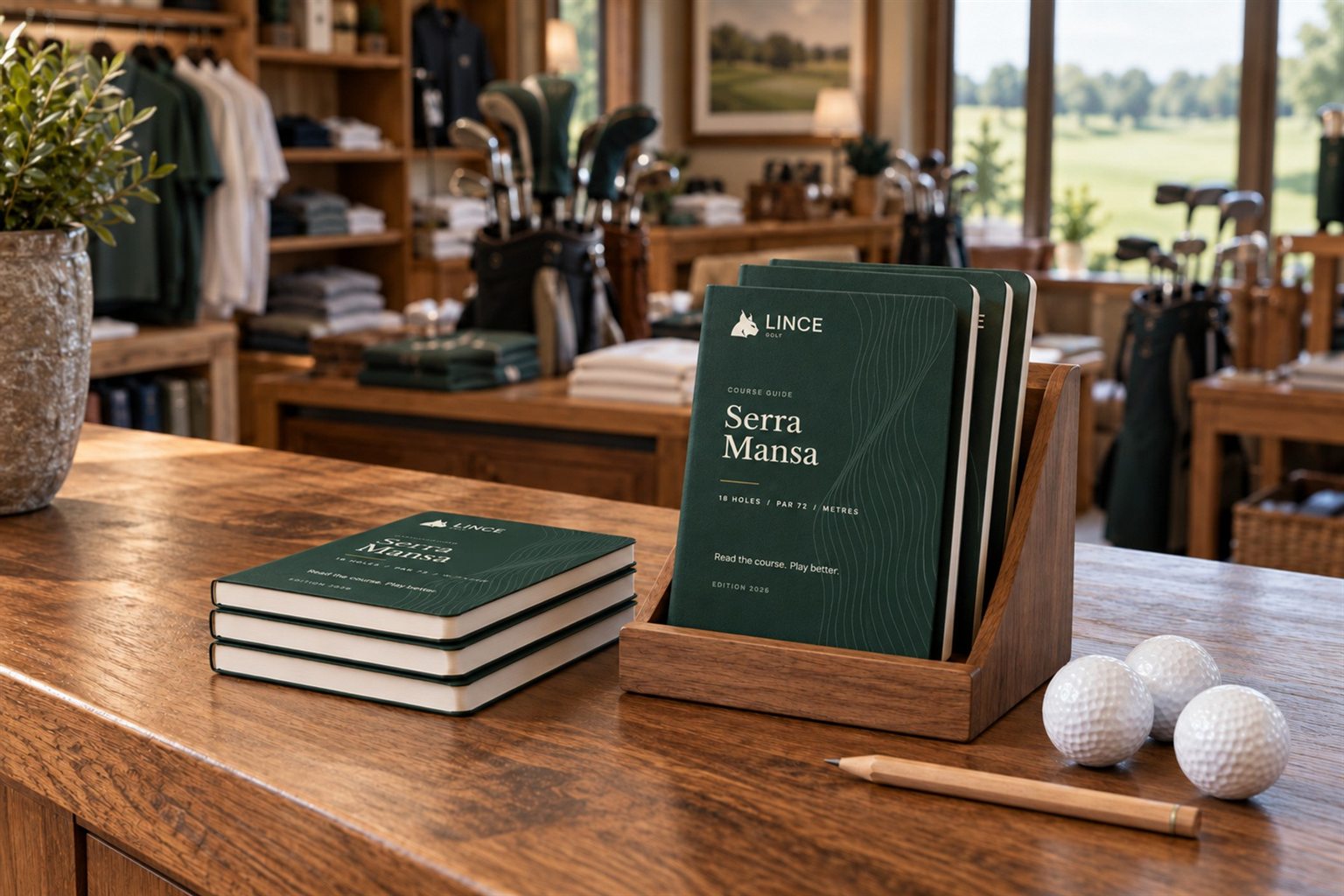
Yardage books for golf clubs, built on a precise survey of the ground. Every tee, every carry, the slope of every green: in a pocket book your visitors buy at the pro shop.
Ask for a sample of your course See what is inside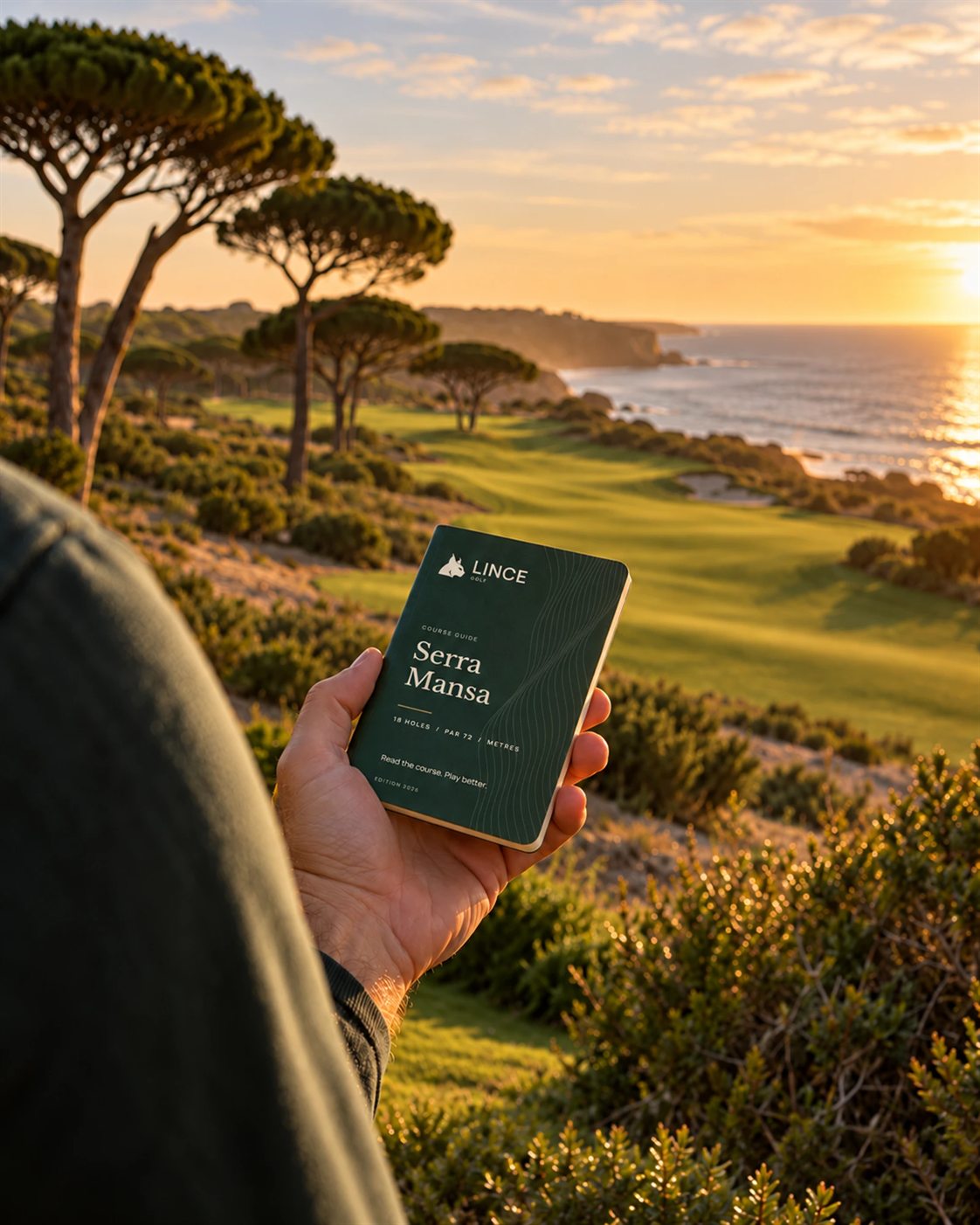

The ground decides where the ball goes.
The guide
What the ground tells you, on four pages per hole.
Most yardage books are drawn from aerial photos. A Lince guide starts from the ground itself. That is how it shows what a photo cannot: how much a shot climbs, where the fairway falls away, and which way the putt will break.
Distances
From every tee
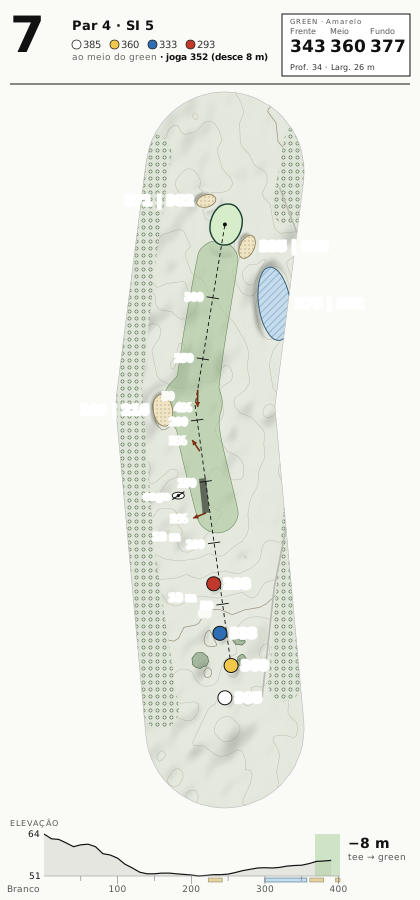
Front, middle and back of the green from each tee colour, measured along the line of play. Carries over bunkers and water, lay-ups to 150 and 100 m.
Relief
Plays-like distance
Hill shading over the whole hole and the height difference to the green, turned into the distance the shot really plays.
Visibility
Blind zones
Where the landing area or the green cannot be seen from where you play.
Greens
Slope you can read
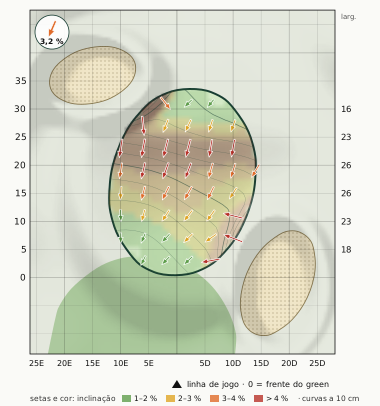
Fall arrows in four steepness bands and 10 cm contours on a 5 m grid, so you know where to leave the ball before you hit the approach.
Trees
Canopy and height
Trees near the line of play, with their height, their distance from the tee and how far they stand off the line.
Game plan
Where not to miss
A short plan for every hole, written from the data and checked with the club: the safe side, the trouble, the shot to the green.
Sample pages
Drawn from the terrain, not from a photo.
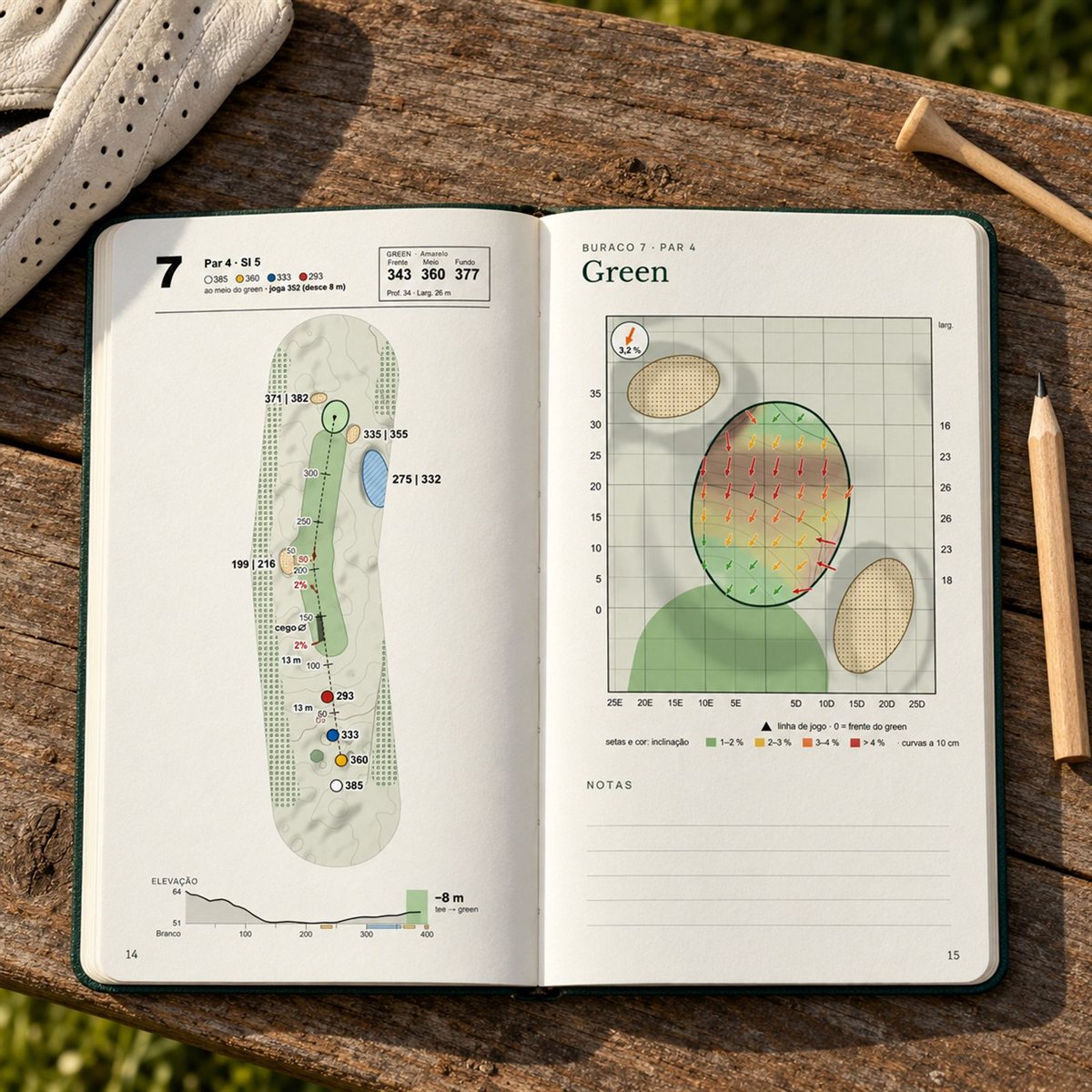
Two pages from a sample guide: the hole map with relief and the green in detail.
Products
One course, three editions.
Edition 01
Yardage book
- Hole maps with relief
- Distances from every tee
- Hazards, lay-ups, blind zones
- Course map and scorecard
Edition 02
Green guide
- Every green in detail
- Slope arrows and 10 cm contours
- Within the scale limits of Rule 4.3
- Pocket format
For clubs
Club edition
- Your club's name and logo on the cover
- Sold at your pro shop, with a share for the club
- Printed on water-resistant paper
- Digital edition (PDF, EPUB) for your website

Green-reading material is limited by the Rules of Golf (Rule 4.3, Interpretation 4.3a/1): maps no larger than 3/8 inch to 5 yards (1:480) in a book no larger than 4¼ × 7 inches. Lince guides draw every green at 1:500 or smaller and are printed in pocket format, so players can carry them in competition.
For clubs
A guide made with your club.
Visitors who do not know the course play faster and enjoy it more with a good guide. We make it, you approve it, your pro shop sells it.
Mapping
We map the course in detail: tees, fairways, greens, bunkers, water and the shape of the ground.
Field check
A round on the course to confirm tees, markers and out of bounds against the club's own plans.
Club approval
Your professional or manager reviews the game plans and local rules before anything is printed.
Print
A pocket book in your club's edition, delivered to the pro shop, and updated when the course changes.

Every course reads differently.
Contact
Ask for a sample of your course.
Tell us your club and we will send two sample pages of one of your holes: the map and the green.
[email protected]